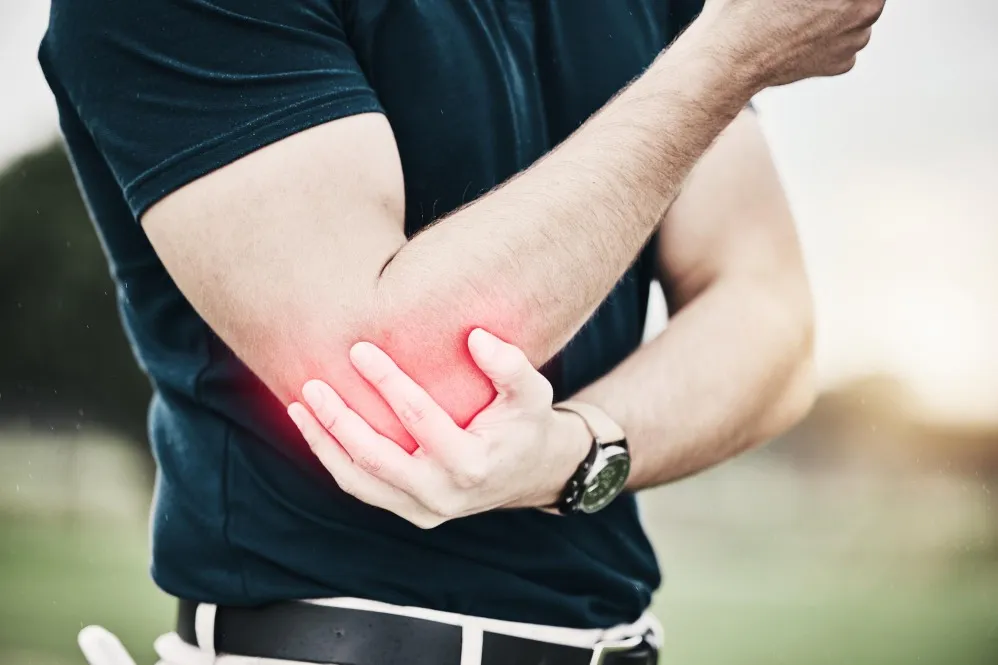
Elbow pain is often associated with overuse, but persistent discomfort should not automatically be dismissed as a temporary strain. The elbow contains bones, cartilage, ligaments, tendons, and nerves, and problems involving any of these structures can affect grip, lifting, rotation, and arm movement.
People in Borivali who experience ongoing elbow pain, stiffness, instability, or weakness may benefit from evaluation by an elbow surgeon.
Rejoice Ortho Care And Polyclinic assesses elbow problems ranging from repetitive-use injuries to fractures and complex joint conditions.
Signs that deserve closer attention
An orthopaedic evaluation becomes particularly relevant when you notice:
- Pain lasting several weeks
- Significant loss of elbow movement
- Difficulty gripping or lifting objects
- Pain following a fall or direct injury
- Repeated locking or catching
- Swelling that does not settle
- Numbness or tingling extending into the hand
- Elbow instability during activity
Sudden deformity or severe symptoms after trauma require prompt medical assessment.
Common causes of persistent elbow symptoms
Tennis elbow is well known, but it is only one possible cause. Other conditions include golfer's elbow, ligament injuries, cartilage problems, fractures, arthritis, tendon tears, and nerve compression.
The nature of work can also influence elbow problems. Repetitive lifting, manual work, racquet sports, gym training, and repeated wrist movements can place additional load on the joint.
How is an elbow problem diagnosed?
The evaluation generally starts with understanding how the symptoms began. A surgeon may examine elbow movement, tenderness, stability, grip strength, and nerve function.
X-rays can reveal fractures, arthritis, or changes in bone. MRI or other investigations may be useful when tendon, ligament, cartilage, or other soft-tissue damage is suspected.
Treatment depends on the diagnosis
Many elbow problems can improve with rest from aggravating activities, physiotherapy, exercise modification, medication, or other conservative measures.
Surgical treatment may be considered for certain fractures, severe tendon or ligament injuries, persistent mechanical problems, or conditions that remain significantly limiting despite appropriate non-operative management.
Getting an accurate diagnosis early can prevent months of treating 'elbow pain' without identifying what is actually causing it.
Keywords