Knee arthritis does not progress in exactly the same way for every person. Some patients remain active with exercise, medication, weight management, and other conservative measures for years. Others develop severe pain and restricted mobility that significantly affects everyday life.
Understanding when Total Knee Replacement differs from continued non-surgical treatment can help patients in Borivali evaluate their options more realistically.
Conservative Care Focuses on Symptom and Function Management
Early or moderate knee arthritis is often managed without surgery.
Depending on the individual, treatment may involve:
- Activity modification
- Physiotherapy
- Strengthening exercises
- Weight management where appropriate
- Pain-relieving medication
- Walking support
- Selected injections
These measures cannot necessarily restore worn cartilage, but they may improve comfort and function.
If symptoms remain manageable and everyday activities are reasonably preserved, continuing conservative treatment may be appropriate.
What Changes When Arthritis Becomes Advanced?
Advanced arthritis can produce persistent pain, stiffness, deformity, reduced walking tolerance, and difficulty with stairs or daily tasks.
Patients may find that previously effective measures provide progressively less relief.
This is when knee replacement may enter the discussion.
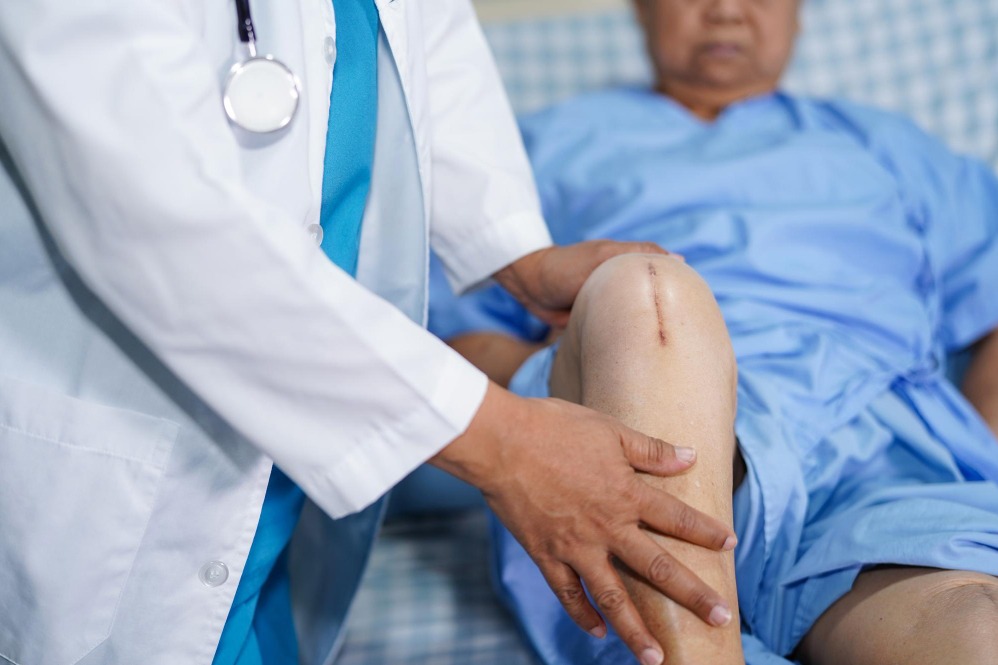
Total knee replacement involves removing damaged joint surfaces and replacing them with artificial components designed to create a smoother, more functional joint articulation.
Surgery Is Not Chosen From an X-Ray Alone
An X-ray showing arthritis does not automatically mean that a patient needs knee replacement.
Orthopaedic evaluation considers both imaging and real-life symptoms.
Questions commonly considered include:
- How severe and frequent is the pain?
- Does pain occur at rest or disturb sleep?
- How much walking is possible?
- Are stairs becoming increasingly difficult?
- Is knee stiffness limiting normal activities?
- Have suitable non-surgical treatments been tried?
- How much does the condition affect independence or quality of life?
The combination of these factors helps determine whether surgery is reasonable.
What Should Patients Expect From Recovery?
Knee replacement requires active participation in rehabilitation. Early recovery usually focuses on mobility, wound care, swelling management, and gradually restoring knee movement.
Strength and walking ability improve progressively rather than overnight.
Individual recovery varies according to general health, preoperative function, muscle strength, age, and other clinical factors.
For patients considering Total Knee Replacement in Borivali, an evaluation should include a clear discussion of the severity of arthritis, treatment alternatives, expected rehabilitation, potential risks, and realistic goals.
Rejoice Ortho Care And Polyclinic offers orthopaedic assessment for people dealing with persistent knee pain in Borivali and nearby western Mumbai areas.
The decision is ultimately not about choosing surgery simply because arthritis exists. It is about determining whether knee symptoms have reached a stage where conservative measures are no longer providing adequate function and whether replacement is appropriate for that individual's circumstances.
Keywords